Stone rarely fails on day one. It fails by degrees. A faint etch beneath a citrus bowl, a trail of micro-scratches from gritty shoes, a darkening ring around a faucet, the lost sparkle under the breakfast bar where everyone leans an elbow. Natural stone doesn’t just sit there. It records how you live. With the right care, it records the best version of that story, not the scuffs.
I have spent years inside kitchens, hotel lobbies, shower stalls, and gallery floors, restoring surfaces people thought were beyond saving. The work isn’t mysterious, but success depends on understanding the stone, choosing the right abrasives and chemistry, and moving patiently. This guide distills what technicians do on site and what homeowners can do between visits. Whether you manage a commercial property or you inherited a marble vanity that looks tired, you’ll find practical steps to turn dull into brilliant and keep it there.
Stone types and what they secretly hate
Limestone, marble, and travertine are calcium carbonate stones. They polish beautifully, but they react to acids. Vinegar, lemon juice, wine, even mild bathroom cleaners can etch the surface, leaving a dull mark that looks like a stain. It isn’t. The top microns of stone have dissolved, so no spray-on product will bring back the sheen. That calls for honing, then polishing.
Granite sits in another category. It is an igneous rock with feldspar, quartz, and other hard minerals. It shrugs off acids better, but it has pores and weak spots along fissures. Cooking oils, cosmetics, and dyes can migrate into those pores. Quartzite and engineered quartz add their own quirks, but if your priority is natural stone restoration, think first about whether your surface is acid-sensitive or just porous.
On floors, the finish matters as much as the stone type. A honed limestone lobby can hide traffic patterns longer, where a high-gloss marble foyer shows every heel strike and dust mote. On countertops, a lightly honed granite absorbs light Additional info and masks micro-wear better than a mirror polish. Shine is not the same as quality. The best finish suits how you use the space.
When cleaning isn’t enough
I see three recurring conditions that drive calls for stone restoration services. The first is etching, especially on marble countertops and vanities. The second is accumulated micro-scratching that turns a once-crisp reflection into a fog, common in stone floor restoration. The third is staining when a sealer has worn off or was never applied correctly. Each requires a different intervention, and the only way forward is to name the problem accurately.
Etches are not stains. If you can feel a soft dip under your finger, even barely, you are looking at a micro-etch. Stains darken the stone and keep their color regardless of your viewing angle. Scratches are linear and directional. Under angled light you can track them like a map of traffic. I carry a small LED and a couple of loupe lenses for this reason. You should use whatever light you have and learn to read what the surface tells you. Correct diagnosis saves hours.
The polishing chain: from coarse to brilliant
Polishing is not a product, it’s a sequence. The result depends on the three steps in the middle, not the last step on top. In professional stone care, we work through abrasives in stages, starting coarse enough to remove damage, then progressively refining the surface so the final polish can take. Skip a grit and you chase ghosts of the previous step forever.
On calcium-based stones like marble, travertine, and limestone, the process usually begins with honing. This means diamond-impregnated pads or resin-bonded diamonds at 100, 200, 400 grit, sometimes down to 800 or 1000 depending on the target finish. If we’re erasing etches or scratches, the first grit does the heavy lifting. The next grits remove the scratches created by the previous grit. The surface looks matte and even at 400. From there, a marble polishing compound with oxalic acid or a non-acid micro-abrasive can raise the gloss. The chemistry matters. Oxalic acid reacts with calcium carbonate to create a thin calcium oxalate layer that boosts reflectivity. In wet bathrooms with poor ventilation, I prefer less-reactive compounds to avoid ghosting.
Granite restoration follows a similar sequence using harder abrasives. Diamonds suited for granite are different in composition and resin bond. Granite often wants more steps to get a uniform polish, and a standard polishing powder won’t work. We use granite-specific polishing compounds or buffing pastes and sometimes end with a light crystallizer on commercial floors, used judiciously. Over-crystallization can look plastic and trap dirt.
Travertine has its own pattern of voids that may be factory-filled with resin. Heavy honing can open those voids. Once you start, you might need to refill for a level look. That is not failure, just part of travertine restoration. Expect it, plan it, and budget for it.
Edge work makes or breaks the job
Edges tell you if the technician cared. On countertops, we tape, protect, and then match the edge profile with the same grit sequence used on the flat field. A bullnose or ogee profile requires patience and smaller pads or finger files to maintain geometry without flat-spotting. On floors, perimeter zones near walls collect more grime and are easy to miss with large machines. I keep a set of handheld diamonds for toe-kicks, around door casings, and inside closets. That is where a good job turns into a great one.
Sealing: what, why, and how often
Sealers are not a force field. They are breathable repellents that slow down absorption and buy you time. They do nothing against etching on calcium stones because etching is a chemical reaction at the surface, not a liquid soaking into pores. People confuse this. If you seal marble and then spill lemon juice, it will still etch. Sealing is about stains, not acids.
There are two main classes you will encounter in stone cleaning and sealing: penetrating impregnators and topical coatings. For interior natural stone restoration, a penetrating impregnator is the standard. It lines the pore structure with fluoropolymers or silanes and does not change the texture. Good products keep a surface looking natural, whether honed or polished. Topical coatings sit on top like varnish. They add gloss and can protect soft stones in harsh commercial settings, but they scratch, trap dirt, and require maintenance stripping. I avoid them on kitchens and baths except in rare edge cases.
How often to seal depends on traffic, stone type, and the product used. Honed limestone in a kitchen might want fresh sealer yearly, sometimes every 18 months for light use. Polished granite can go two to five years depending on porosity and whether oil-heavy cooking is a factor. Instead of calendars, run a water test. Drip a teaspoon of water on a clean, dry area. If the dark spot disappears within a minute, the stone still repels. If it darkens and lingers for more than five minutes, consider resealing.
What pros do differently
When you hire stone sealing specialists, you buy judgment as much as labor. Professionals bring variable-speed machines, diamonds in tight grit spacing, and chemistry to match the stone. More important, they know when to stop. Over-honing can create wave patterns. Over-polishing on marble can burn the surface, leaving swirl marks that only a step down in grit can fix. A seasoned tech respects the limits of the slab.
On a recent marble countertop restoration, the owner had used a popular etch remover paste that worked on small rings but left a patchwork sheen. Under raking light, it looked like mended fabric. We honed the entire island at 200 and 400 grit, then polished with a low-acid powder, not because the paste was bad, but because spot treating a field of micro-etches always leaves a quilt. Full-field restoration brings uniformity back.
In heavy-use commercial lobbies, we sometimes build a maintenance program instead of a one-time fix. That might mean quarterly light honing and buffing, daily dust mopping with treated pads, and scheduled resealing. It costs less over the year than waiting for a rescue visit after the floor has turned gray and lifeless.
Repairing chips, pits, and cracks
Not every defect requires a full resurface. Natural stone repair can be surgical. Chips on countertop edges often accept a color-matched resin or polyester filler. The trick is tinting, feathering, and polishing the patch so it blends under both ambient and raking light. Pits on granite can be filled, but remember that some granites are naturally pitted. Filling all of them can make the surface look unnatural.
Cracks need diagnosis. Is it a hairline in resin or a structural break through the slab? Over a dishwasher, heat and vibration can open existing fissures. We sometimes stabilize those with low-viscosity adhesives and mechanical reinforcement from underneath, then polish the surface. Not every crack can be made invisible, but many can be made stable and unobtrusive.
Etch and scratch removal without drama
Stone etch removal on marble and limestone is a controlled micro-hone. For a single glass-ring, a professional might spot-hone with 400, then 800, then blend the polish. Done right, the patch disappears. Done carelessly, the spot becomes a shiny halo that looks worse than the ring. On floors, stone scratch repair follows the same principle at scale. Start at the lowest grit that erases the deepest scratch, then step up carefully. If you cannot see the coarse scratch under raking light, only then move to the next grit.
One quality control trick: use multiple light sources. I carry a cool LED and a warmer halogen. Each reveals different flaws. Before any polishing compound touches the surface, every previous grit’s tracks must be gone. Compounds don’t remove scratches, they clarify and boost reflectivity. If you rely on the compound to fix your honing, you are polishing your mistakes.
Sealing smart: preparation and application
Sealer performance depends on how well you prepare the surface. Clean means more than looking clean. Grease and surfactant residues block sealer penetration. For kitchens, I degrease with a pH-neutral or mildly alkaline cleaner designed for stone, rinse thoroughly, and let the surface dry. Moisture in the pores can prevent sealer uptake. On countertops, I aim for at least 12 to 24 hours of dry time after wet work. Floors can need longer in humid spaces.
Application is about wetting the surface evenly and giving the product time to dwell. I flood the surface with a lambswool applicator or microfiber, keep it wet for the product’s dwell window, then remove all excess. Do not let impregnators dry on the surface. They can leave a sticky film that attracts dirt. Two coats, wet-on-wet, are often better than one. Then avoid water and oils for a full cure time, usually 24 to 72 hours depending on the chemistry. Read labels, but trust your eyes too. If the stone still flashes dark under a water drop after curing, a third coat might be warranted in select zones like a sink rail.
Daily habits that protect your investment
Stone maintenance tips are simple and stubbornly effective. Grit is sandpaper. Remove it early. Dust mop or vacuum floors daily in busy spaces. On countertops, wipe spills quickly, especially acidic foods and oils. Use pH-neutral cleaners made for stone. Avoid glass cleaners with ammonia on marble and limestone. Avoid abrasive powders everywhere.
Use coasters under vinegar bottles and wine glasses. Use trivets, not because granite can’t take heat, but because thermal shock near a cutout can crack it. On shower walls, a squeegee after each use slows mineral build-up. If you have soft water, sealing might last longer. If you have hard water, expect more frequent polishing or descaling in wet areas.
When to call a pro and what to ask
If you can see or feel damage, and standard cleaning hasn’t helped, consider professional stone care. For stone countertop restoration after a kitchen remodel, plan a site visit and ask for a written scope describing the grit sequence, expected finish, masking and protection steps, and sealer type. Ask how they handle edges, sinks, and cutouts. For stone floor restoration in a commercial space, request a small sample area first. The test patch should set expectations for gloss, slip resistance, and uniformity.
A good contractor will ask you how you use the space and might even argue against a super-high gloss if your conditions don’t support it. They should also explain the maintenance path after they leave. Restoration without maintenance is a short story.
Special notes by stone type
Marble restoration thrives on discipline. Keep acid away, accept that minor etches happen, and choose a hone level you can maintain. Kitchens with a high-polish marble island look spectacular on day one, then demand constant attention. A satin hone can be a smarter choice. In baths, proper ventilation helps prevent humidity from interfering with polishing outcomes.
Granite restoration focuses on pore management and uniform polishing. Some dark granites, especially resin-treated slabs, can show haze if polished with the wrong compound. Test before you commit. Oil stains in granite respond to poultices. The right solvent depends on the contaminant. Mineral oil wants a different poultice than coffee. Patience wins. Expect 24 to 48 hours per application and multiple rounds for deep stains.
Limestone restoration benefits from gentle chemistry. Avoid strong alkalines that can roughen the surface. Honed finishes suit limestone’s character and hide wear. For stairs, combine restoration with anti-slip strategies such as micro-etching the nosing or using discreet strips, not thick topical coatings.
Travertine restoration may include filling. Factory-filled travertine can lose filler over time, especially on floors. Refill with color-matched epoxy or polyester, then hone and polish uniformly. Honed travertine floors are comfortable underfoot and easier to maintain than high-gloss finishes in family homes.
A realistic path for heavily worn floors
A hotel lobby I service has a large-format marble floor under constant luggage traffic. The pattern of wear appears first at the bell stand and elevator banks. Waiting too long between visits used to require a full three-day restoration with aggressive honing. We reset the plan. Now, every quarter, we complete a light hone at 400 and 800 in the traffic lanes, then polish the entire field. Once a year, we run a deeper sequence including 200 grit in the worst paths. The floor holds a consistent, lively gloss around 65 to 75 GU under a standard gloss meter, and guests do not notice transitions between lanes and field. That is stone surface rejuvenation in practice: smaller, smarter steps before deterioration cascades.
What to expect on project day
A typical kitchen stone polishing and sealing visit runs several hours to a full day. The crew protects adjacent cabinetry, appliances, and floors. Water management is key. We use controlled slurry, bowls of clean rinse water, plastic sheeting, and wet vacs. Good tape lines and foam dams around sink cutouts prevent misery later.
Noise is moderate. Machines hum rather than scream. There is some odor from polishing compounds or solvents, usually mild. Ventilation helps. The surface remains out of service for the curing period if sealed, so plan your meals accordingly. On floors, we stage in zones so you can still move through the space.
Budgeting, value, and trade-offs
Costs vary by region and scope. As a rough guide, marble polishing services for a standard kitchen island might fall into a mid hundreds range for spot treatment, up to four figures for full-field honing and polishing, especially with heavy etch removal and seam work. Stone floor restoration is often priced per square foot, with light polishing at the lower end and full grind-and-polish at the higher end. Complex patterns, inlays, stairs, and significant repairs add time.
Sometimes the best move is not the shiniest finish, but the most sustainable one. A satin hone can reduce visible wear patterns, lower maintenance frequency, and still read as elegant. Conversely, a luxury boutique may demand a near-mirror reflection that is maintained nightly. Be honest about the demands of your space and choose a finish that fits.
Two practical checklists you can use
Daily and weekly habits that keep stone looking new:
- Wipe spills quickly, especially acids and oils, using a pH-neutral stone cleaner and clean microfiber. Dust mop or vacuum grit from floors before it abrades the surface, paying attention to entryways. Use coasters, trivets, and felt pads under frequently moved objects, and squeegee shower walls after use. Run the water-drop test quarterly to gauge sealer effectiveness and reseal when absorption increases. Keep a soft LED flashlight handy; inspect surfaces at an angle to catch early scratches or etches.
Simple scope questions to ask any restoration contractor:
- Which grit sequence will you use, and how will you handle edges, seams, and cutouts? What polishing compounds are planned for my stone type, and why those over alternatives? Will you perform a small test area and measure gloss or slip resistance before proceeding? What sealer will you apply, how many coats, and what cure time and aftercare do you recommend? How will you protect adjacent finishes and manage dust, slurry, and cleanup?
Why some DIY kits help and others disappoint
Off-the-shelf kits can fix light etches on small areas, especially on polished marble. The best include a fine abrasive and a polishing agent designed for calcium stones. They work when the damage is shallow and isolated. They falter on widespread micro-etching, mismatched sheen, or when the substrate is not truly marble. I have been called to homes where a cultured marble vanity, which is a polymer composite, was treated with a marble compound and turned gummy. Know your material. If in doubt, test on an inconspicuous spot or send a close-up photo to a professional.
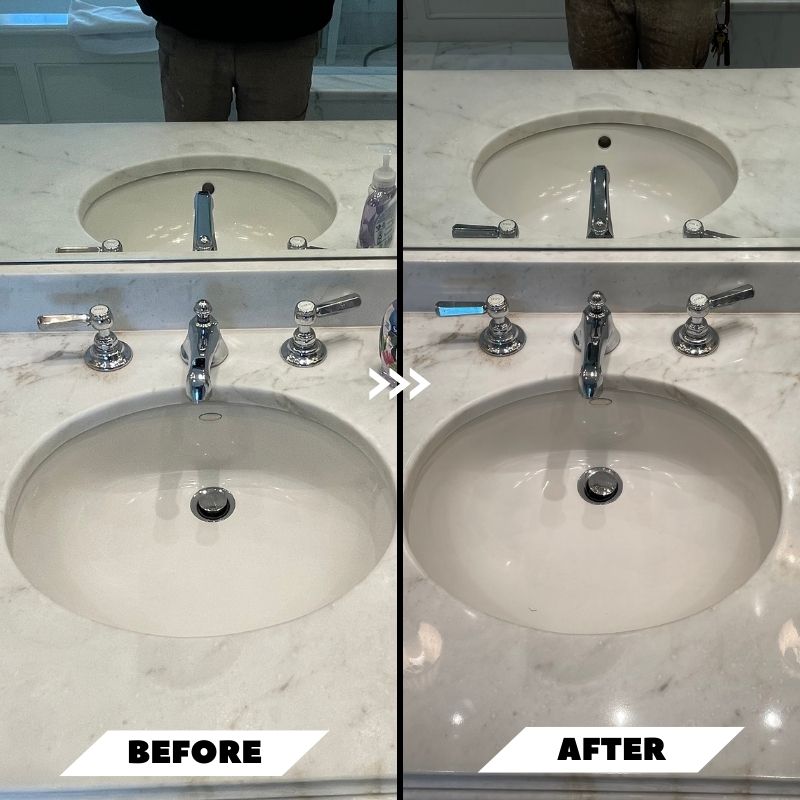
For granite, most consumer kits address stains with poultices. They can work, but they require time and correct pairing of solvent to stain. Few DIY kits offer meaningful granite polishing options because granite demands harder abrasives and specialized compounds. Without the right tools, it is easy to create a hazy patch.
Sustainability, safety, and sensible chemistry
Modern impregnators are low in VOCs compared to older formulations. Still, ventilation is smart. Gloves, eye protection, and careful handling apply to pros and homeowners alike. Avoid mixing cleaners. An acid plus bleach is never a good idea, and even a mild acid on marble is a guaranteed etch. For heavy soap scum in showers with marble or limestone, use specialized descalers labeled safe for calcium stones, or plan a light hone instead of harsh chemistry.
Stone’s most sustainable trait is longevity. Restoration avoids replacement, keeps slabs out of landfill, and often costs a fraction of tearing out and reinstalling. Choosing the right finish for your use pattern reduces product consumption and service visits over time.
Bringing it all together
Stone polishing and sealing is craft and care, not magic. Identify the stone, read the damage, pick the right abrasives, and proceed in measured steps. Respect edges. Choose a finish that suits the life lived on that surface. Use an impregnating sealer to slow stains, not to stop chemistry. Keep grit off the floor, acids off the counter, and water off the shower walls after use. When you need help, look for professionals who explain their plan in plain language and welcome a test area.
If your marble has lost its clarity, if your granite tops have grown darker around the cooktop, or if a travertine foyer looks tired, a thoughtful approach to stone surface restoration will bring back depth and character. Done well, stone polishing and sealing do more than restore a shine. They restore the crisp edges of a room, the way light travels across a floor, the quiet luxury that natural stone brings to a space. And with steady maintenance, that brilliance lasts.